Our Location
304 North Cardinal St.
Dorchester Center, MA 02124
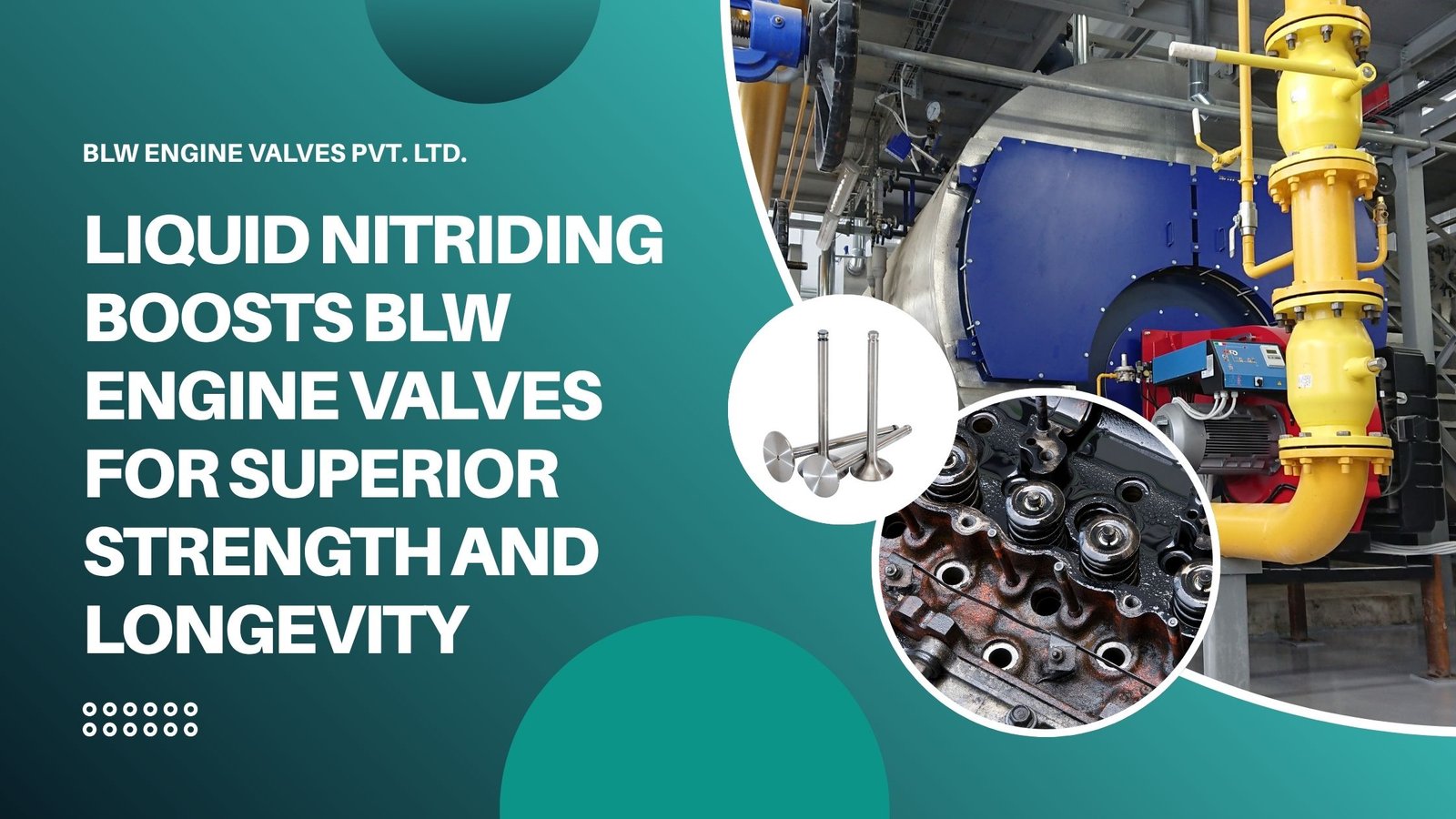
In the competitive automotive industry, the durability and performance of engine components are critical. BLW Engine Valves has established itself as a leader in manufacturing high-quality engine valves by incorporating advanced processes like liquid nitriding. This surface hardening technique plays a pivotal role in enhancing the strength and longevity of engine valves, making them more reliable and efficient in demanding conditions. In this blog, we’ll explore how liquid nitriding is revolutionizing the performance of BLW Engine Valves and contributing to their exceptional durability.
Liquid nitriding, also known as salt bath nitriding, is a specialized surface hardening process that involves diffusing nitrogen into the surface layer of metal parts. The process occurs in a molten salt bath, where metal components are immersed, allowing nitrogen atoms to penetrate the surface. This diffusion creates a hard, wear-resistant surface layer, significantly enhancing the metal’s durability and performance. Unlike traditional carburizing or case hardening methods, liquid nitriding operates at lower temperatures, reducing the risk of distortion and ensuring a uniform hardening effect.
For engine valves, which are subjected to extreme temperatures and pressures, liquid nitriding offers several critical benefits:
Reduced Friction: By creating a smoother and harder surface, liquid nitriding reduces friction between engine components, leading to improved efficiency and reduced energy loss.
When comparing surface hardening techniques, liquid nitriding stands out for several reasons:
Liquid nitriding is more than just a surface hardening process; it’s a key factor in enhancing the durability, performance, and sustainability of BLW Engine Valves. As the automotive industry continues to evolve, we remain at the forefront of innovation, using the latest techniques to deliver superior products. By choosing liquid nitriding, BLW Engine Valves ensures that their products meet the highest standards of quality, making it the preferred choice for cutting-edge automotive applications. Whether you’re looking for engine valves that can withstand extreme conditions or seeking a partner committed to sustainable manufacturing, BLW Engine Valves has the solutions you need.
Liquid nitriding is a surface hardening process that diffuses nitrogen into the surface of metal components, creating a hard, wear-resistant layer for improved durability and performance.
It enhances surface hardness, fatigue strength, and corrosion resistance, making BLW Engine Valves more reliable and efficient under extreme conditions.
Liquid nitriding operates at lower temperatures, reducing distortion, and provides uniform surface hardening, which is critical for precision components like engine valves.
By creating a nitrogen-enriched surface layer, it resists wear, reduces friction, and protects against environmental damage, extending the valve’s lifespan.
The process produces a smoother and harder surface, minimizing friction between engine components, which enhances efficiency and reduces heat generation.
Yes, liquid nitriding consumes less energy, emits minimal waste, and allows for the recycling of salt baths, making it a sustainable surface hardening method.
The process improves fatigue strength, enabling engine valves to withstand repeated stress cycles without cracking or failing.
Liquid nitriding offers better dimensional stability, uniform surface hardness, and lower environmental impact compared to carburizing.
Yes, it significantly increases the wear resistance of BLW Engine Valves, ensuring long-lasting performance in high-stress environments.
BLW uses advanced liquid nitriding techniques to deliver superior quality, durability, and sustainability in their engine valves, making them ideal for cutting-edge automotive applications.
