Our Location
304 North Cardinal St.
Dorchester Center, MA 02124
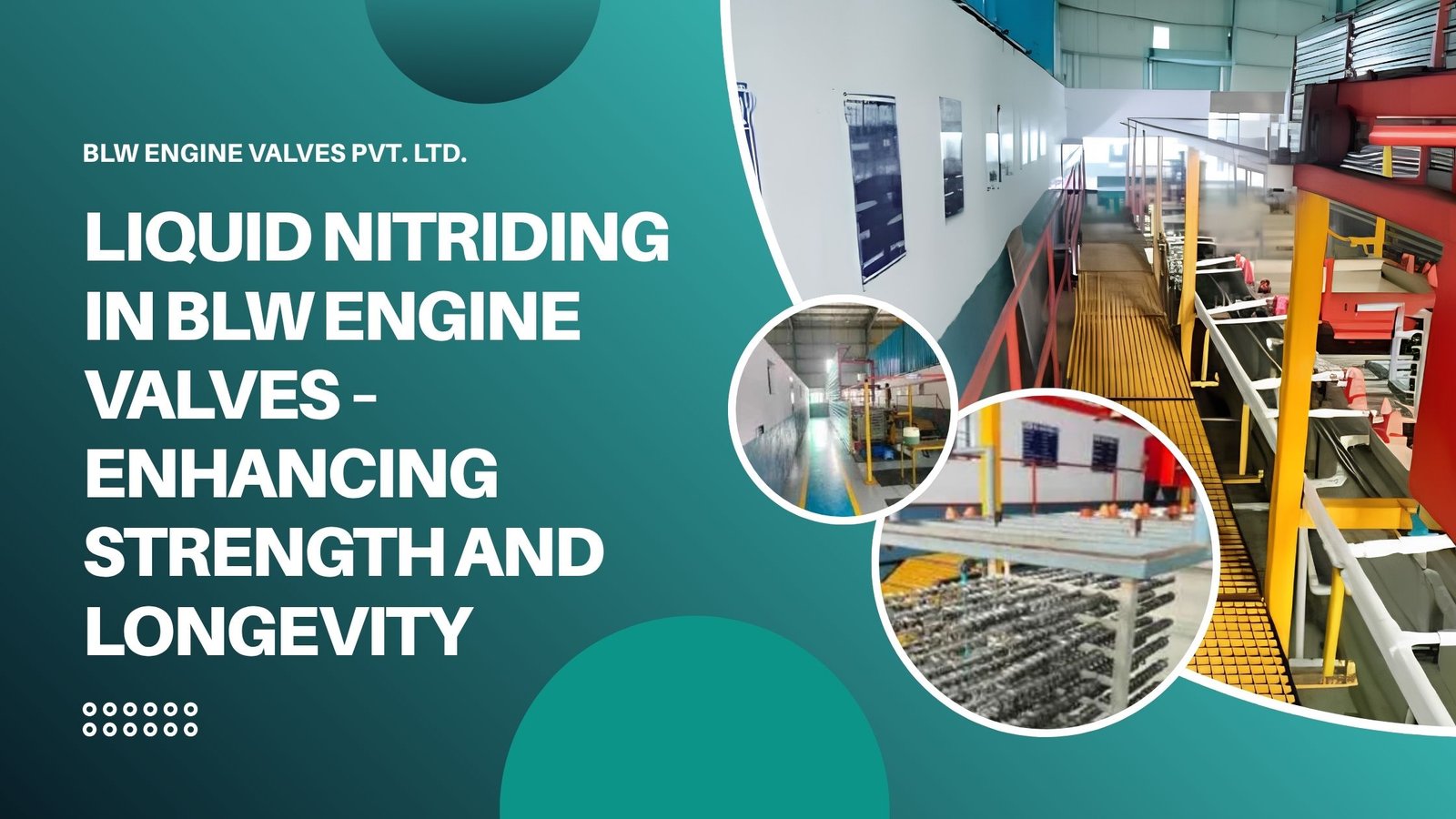
Engine valves play a critical role in the performance of any engine, especially under high-stress conditions. At BLW, we are committed to ensuring that our valves offer unmatched strength and longevity. One key process that contributes to these superior qualities is liquid nitriding. In this blog, we’ll explore the applications of liquid nitriding, the different nitriding systems, and the operating procedures that ensure consistent, high-quality results.
Liquid nitriding is a heat treatment process that involves diffusing nitrogen into the surface of steel components, significantly enhancing their wear resistance, fatigue strength, and overall durability. For BLW Engine Valves, this process ensures that the valves can withstand the high temperatures, pressures, and mechanical stresses they encounter during engine operation.
The applications of liquid nitriding extend beyond just automotive components, as it is also used in industries such as aerospace, machinery, and heavy equipment manufacturing. However, in the context of engine valves, liquid nitriding is especially effective in extending the lifespan and performance of our products, ensuring that they deliver consistently reliable results.
There are several nitriding systems available, each offering unique benefits depending on the specific application and materials being treated. At BLW, we utilize the most advanced systems to ensure that our engine valves meet the highest standards.
Liquid pressure nitriding is one of the most effective methods of applying nitriding to engine valves. This process involves applying pressure to liquid baths to increase the diffusion of nitrogen into the valve surface. This results in a hardened surface that is resistant to wear and corrosion, ensuring that the engine valves can perform at their best under extreme conditions.
In aerated bath nitriding, air is bubbled through the nitriding bath to improve the evenness of the nitrogen diffusion. This process ensures a uniform surface hardening, which is critical for components like engine valves that must withstand heavy use.
This method utilizes a combination of cyanide and cyanate salts in an aerated bath to achieve deeper nitriding effects. The result is enhanced fatigue strength and wear resistance, which are essential for engine valves exposed to high-temperature environments.
To reduce the environmental impact of the nitriding process, BLW also employs aerated low-cyanide nitriding. This method achieves similar performance benefits to traditional cyanide-based processes but with lower toxicity, making it a safer and more environmentally friendly option.
The effectiveness of liquid nitriding can vary depending on the composition of the steel being treated. Engine valves made from high-quality steel are particularly well-suited to the nitriding process, as they allow for deeper nitrogen diffusion and a stronger hardened surface. At BLW, we ensure that the steel used in our engine valves is carefully selected to maximize the benefits of liquid nitriding.
The success of the nitriding process also depends on the proper execution of operating procedures. At BLW, we follow a strict protocol to ensure that our engine valves receive the highest-quality treatment.
Before nitriding, the steel components undergo prior heat treatment to improve their mechanical properties. This step is essential for achieving the desired hardness and strength once the nitriding process is complete.
The nitriding bath must be carefully prepared and started to ensure that the correct temperature and chemical composition are maintained. Consistency in these factors is key to achieving uniform results across all treated components.
In liquid nitriding, the salt bath can be heated externally or internally. Externally heated salt baths are more commonly used for smaller components, while internally heated baths are preferred for larger-scale operations. Each method has its advantages, but at BLW, we choose the heating method that best suits the size and specifications of our engine valves.
Over time, the composition of the nitriding bath can change as chemicals are used up. Aging the bath refers to monitoring and maintaining the chemical balance of the bath to ensure that it continues to provide consistent results. This step is essential for ensuring the long-term quality of nitriding treatments.
At BLW, we take pride in the strength, durability, and longevity of our engine valves. Liquid nitriding is a crucial part of our process, allowing us to enhance the wear resistance and fatigue strength of our valves. By utilizing advanced nitriding systems and following strict operating procedures, we ensure that every BLW engine valve meets the highest standards of performance.
If you’re looking for engine valves that will deliver reliable results in the most demanding environments, look no further than BLW’s liquid-nitrided valves.
Liquid nitriding is a heat treatment process where nitrogen diffuses into the surface of steel components, enhancing wear resistance, fatigue strength, and durability.
Liquid nitriding ensures that engine valves can withstand high temperatures, pressures, and mechanical stresses, extending their lifespan and improving performance.
While widely used in automotive components, liquid nitriding is also applied in aerospace, machinery, and heavy equipment manufacturing.
BLW uses advanced nitriding systems, high-quality steel, and strict operating protocols to deliver consistent, high-performing engine valves.
BLW utilizes systems like liquid pressure nitriding, aerated bath nitriding, and low-cyanide nitriding to achieve superior surface hardening and environmental sustainability.
Liquid pressure nitriding increases nitrogen diffusion, creating a hardened surface resistant to wear and corrosion, ideal for engine valves.
High-quality steel allows deeper nitrogen diffusion, resulting in stronger and more durable engine valve surfaces.
Aerated low-cyanide nitriding reduces environmental impact while maintaining excellent wear resistance and fatigue strength.
BLW pre-treats steel components to improve their mechanical properties, ensuring the desired hardness and strength after nitriding.
BLW monitors and ages the bath to maintain its chemical balance, ensuring consistent results across all treated engine valves.
